
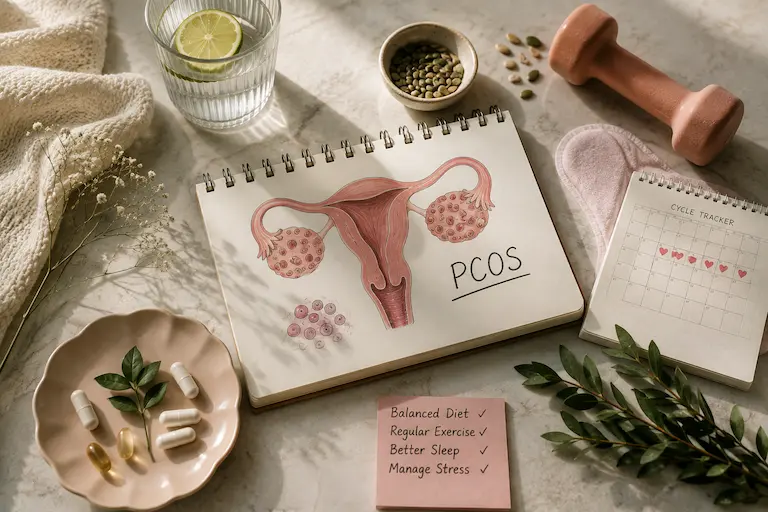
PCOS is a common hormonal and metabolic condition affecting women of reproductive age.
It can affect menstrual cycles, ovulation, androgen levels, fertility, and long-term metabolic health.
Importantly, it doesn’t look the same in every woman.
What Are the Symptoms of PCOS?
Common features include:
- Irregular periods
- Infrequent periods or no periods
- Difficulty predicting ovulation
- Excess facial or body hair
- Acne, scalp hair thinning
- Difficulty becoming pregnant
- Weight gain or difficulty managing weight in some women
Not every woman will experience all of these.
Can You Have PCOS If You Are Not Overweight?
Yes, they can. This condition occurs across different body sizes. Being slim doesn’t exclude the diagnosis. Metabolic assessment may still be appropriate depending on individual circumstances.
What Causes PCOS?
There is no single cause.
It appears to involve a combination of genetic, hormonal and metabolic factors.
Insulin resistance plays a role in many, but not all, cases. Higher insulin levels can influence ovarian hormone production and contribute to increased androgen activity and disturbances in ovulation.
How Is PCOS Diagnosed?
A diagnosis shouldn’t be made simply because a scan describes “polycystic ovaries.”
Assessment generally involves menstrual and ovulatory function, clinical or biochemical evidence of androgen excess, and ovarian morphology or related criteria, while excluding other disorders that can produce similar symptoms.
The exact criteria also vary according to age and clinical circumstances.
What Tests Might Be Needed?
Depending on presentation, assessment may include:
- Hormonal blood tests
- Assessment of glucose metabolism
- Cardiovascular risk assessment where appropriate
- Pelvic ultrasound;
- Pregnancy testing where relevant;
- Tests to exclude other hormonal conditions
Not every patient requires every investigation.
Does PCOS Affect Fertility?
This is a common cause of ovulatory infertility.
If ovulation occurs infrequently, there are fewer opportunities for pregnancy each year.
However, having this condition doesn’t mean you’re infertile.
Many women conceive naturally. Others may require treatment to help restore or induce ovulation.
How Is PCOS Treated?
Treatment should address the woman’s priorities rather than simply treating a scan appearance.
Lifestyle and Metabolic Health: Healthy eating, physical activity, adequate sleep and sustainable weight management can improve general and metabolic health.
For women above their healthy weight range, even modest weight reduction may improve ovulation and metabolic parameters in some cases.
The focus should be on sustainable health improvements rather than extreme dieting.
Managing Irregular Periods: Women who aren’t currently trying to conceive may be offered hormonal treatment to regulate bleeding and protect the endometrium.
Managing Acne and Excess Hair Growth: Hormonal treatments and dermatological or cosmetic therapies may help manage androgen-related symptoms.
Metformin: This medication may be appropriate for selected women, particularly when metabolic abnormalities are present.
It isn’t automatically required for everyone.
Fertility Treatment: For women with anovulation who are trying to conceive, ovulation-induction treatment may be appropriate.
Letrozole is commonly recommended as first-line pharmacological ovulation induction for appropriate women with no other infertility factors.
Other fertility treatments may be considered depending on individual circumstances.
IVF isn’t generally the first treatment simply because of this diagnosis, but it may become appropriate when other infertility factors are present or simpler treatments haven’t worked.
PCOS and IVF
Some women respond strongly to ovarian stimulation.
Careful individualisation of stimulation and trigger strategies can reduce the risk of ovarian hyperstimulation syndrome (OHSS).
In selected patients, strategies such as a GnRH-antagonist protocol, GnRH-agonist trigger and freezing embryos for later transfer can substantially reduce that risk.
Treatment must be tailored to the individual.
Is PCOS a Lifelong Condition?
How it presents can change with age.
Even when pregnancy isn’t a concern, ongoing attention to metabolic and cardiovascular risk factors can be important.
Frequently Asked Questions
Not necessarily. This finding is only one part of a full assessment, not a diagnosis on its own.
Yes. Many do, without needing fertility treatment at all.
It can be elevated in some cases and may support certain diagnostic frameworks, but it shouldn’t be read on its own.
No. It depends on each woman’s symptoms and metabolic profile; treatment should be individualised.
Usually not as a first step. When ovulation is the only issue, simpler options are tried first.
When to Make an Appointment
Consider assessment if you have persistently irregular periods, symptoms of androgen excess, related concerns or difficulty becoming pregnant.
A comprehensive approach can address menstrual health, fertility and longer-term metabolic wellbeing rather than focusing on a single symptom.