A minimally invasive procedure to reduce menstrual bleeding.
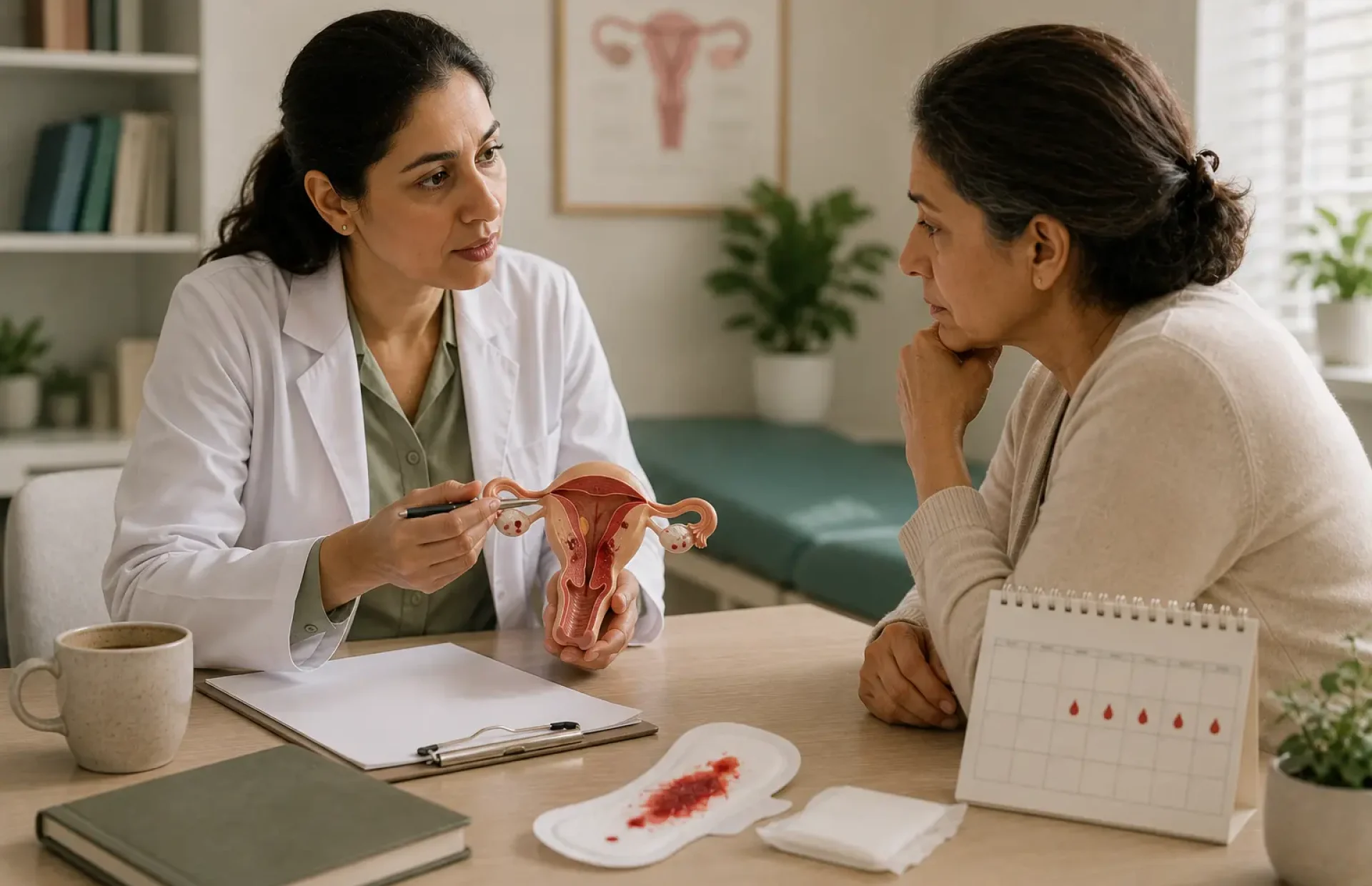
Fibroids are common non cancerous growths that develop in or around the muscle of the uterus. While many fibroids cause no symptoms, larger or multiple fibroids can lead to heavy menstrual bleeding, pelvic pain, pressure or fertility concerns.
Laparoscopic fibroid removal, also known as laparoscopic myomectomy, is a minimally invasive procedure used to remove fibroids while preserving the uterus. The goal is to reduce symptoms and, where appropriate, preserve fertility.
Your gynaecologist will assess your symptoms, medical history, imaging results and individual circumstances to determine whether laparoscopic fibroid removal is appropriate for you.
Laparoscopic fibroid removal, or laparoscopic myomectomy, is a keyhole surgical procedure used to remove fibroids from the uterus without removing the uterus itself.
A thin camera called a laparoscope and specialised surgical instruments are inserted through small abdominal incisions. The fibroids are carefully separated from the uterine muscle and removed, while the affected area of the uterus is repaired.
The procedure is designed to treat suitable fibroids while preserving the uterus and surrounding healthy tissue.
Laparoscopic fibroid removal may be considered when fibroids cause symptoms that significantly affect your quality of life.
You may experience symptoms if you:
Treatment options depend on the size, number and location of your fibroids and may include medication, monitoring, uterine artery embolisation or other surgical procedures.
Laparoscopic fibroid removal may be considered when fibroids cause significant symptoms or when removal may support fertility or other treatment goals.
Your gynaecologist will consider factors such as:
Important: Not all fibroids are suitable for laparoscopic removal. Larger or numerous fibroids may require a different surgical approach. Your doctor will discuss the most appropriate option for you.
During laparoscopic fibroid removal, your gynaecologist uses a small camera and specialised instruments inserted through several small abdominal incisions.
The fibroids are carefully separated from the surrounding uterine muscle and removed. The area where the fibroid was located is then repaired with surgical sutures to restore the uterine wall.
The procedure is designed to remove the fibroids while preserving the uterus and as much healthy uterine tissue as possible.
Before recommending laparoscopic fibroid removal, your gynaecologist will assess your symptoms and imaging results to determine whether the procedure is appropriate for you.
You may need an ultrasound, MRI or other investigations depending on the size and location of your fibroids and your medical history.
Your doctor will also discuss:
During the Procedure
The procedure is performed under general anaesthetic, so you will be asleep during surgery. Small incisions are made in the abdomen to allow the laparoscope and surgical instruments to be introduced.
The fibroids are separated from the uterus and removed. The affected areas are then repaired before the small abdominal incisions are closed.
What Can I Expect After Laparoscopic Fibroid Removal?
Many people can return home on the same day or after a short hospital stay, depending on the extent of surgery and their recovery.
You may experience:
Your healthcare team will provide specific instructions about pain relief, wound care, activity and when you can return to your usual routine.
Recovery varies from person to person, so it’s important to follow the advice provided by your treating team.
Laparoscopic fibroid removal may:
For many people, removing symptomatic fibroids can provide significant improvement in symptoms and quality of life.
Important Considerations
Laparoscopic fibroid removal is not suitable for every fibroid and does not guarantee that new fibroids will not develop in the future.
There are also potential risks associated with the procedure, including infection, bleeding, injury to surrounding organs, blood clots and complications related to anaesthesia. In some circumstances, surgery may need to be converted to an open procedure, and rarely a hysterectomy may be required to control significant bleeding.