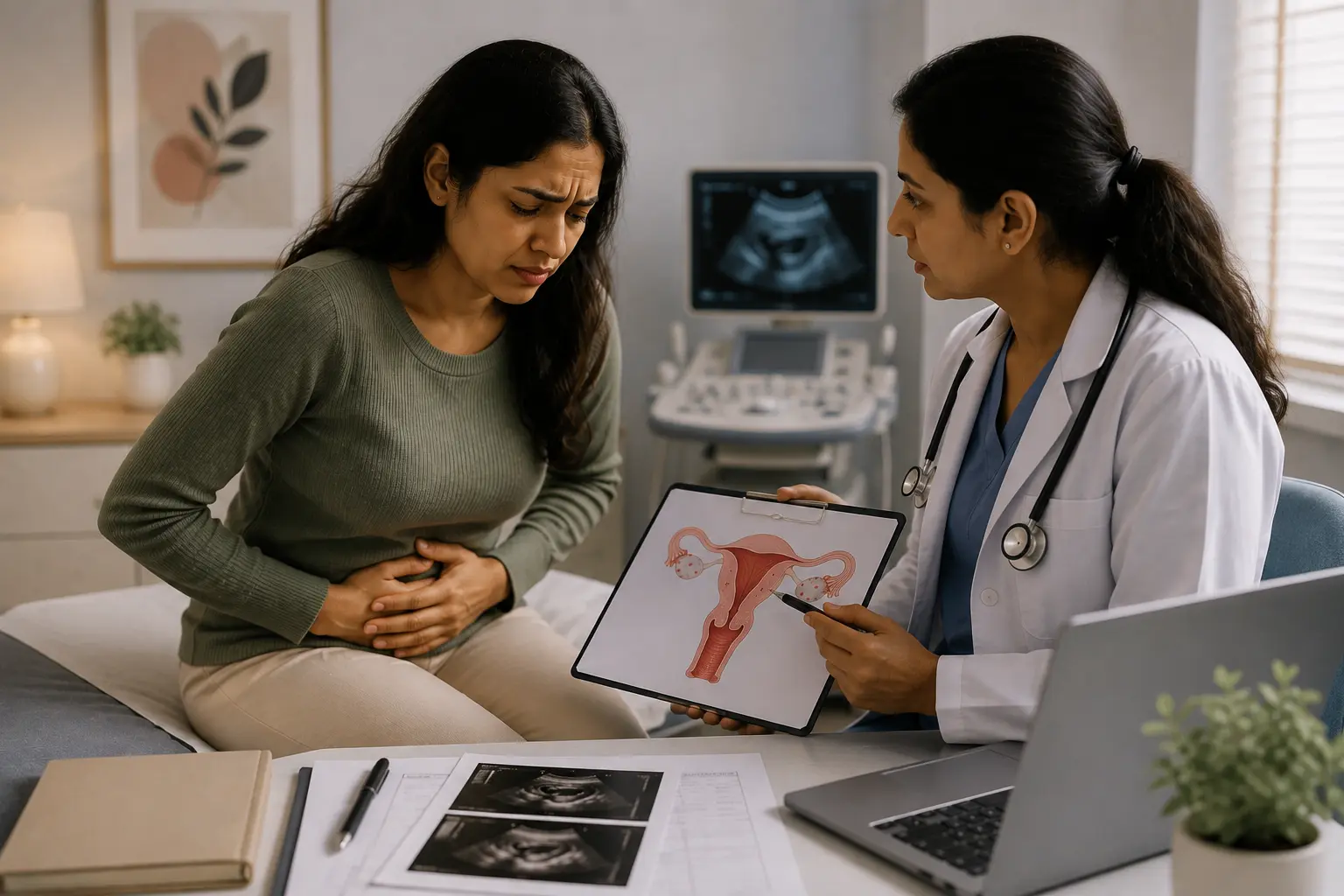
Pelvic pain brings more women into a gynaecologist’s office than almost anything else, and for good reason; it can come from dozens of different places. That’s the whole challenge. Pelvic pain isn’t a diagnosis in itself; it’s a symptom, and the same ache can be pointing to your reproductive organs, your bladder, your bowel, or even your pelvic floor muscles. Working out which one is behind your particular pain means looking at the full picture, not just the pelvis in isolation.
Pain Comes in Many Forms
It might hit suddenly or linger for weeks. It could show up like clockwork with your cycle, or stay constant regardless of timing. Mild and easy to ignore, or severe enough to derail your week, pelvic pain doesn’t follow one script, which is exactly why working out the cause takes a proper look rather than a guess.
Gynaecological Causes Worth Knowing
Endometriosis is a frequent culprit, showing up as painful periods, ongoing pelvic pain, discomfort during sex, and bowel or bladder symptoms that flare with your cycle.
Adenomyosis tends to bring heavy, painful periods paired with a more constant pelvic ache.
Certain ovarian cysts cause pain concentrated on one side, sometimes accompanied by a feeling of pressure.
Fibroids, particularly larger ones or those sitting in an awkward spot, can create heaviness, pressure, and occasionally real pain.
Pelvic infection, specifically pelvic inflammatory disease, is another possibility, often coming with unusual discharge, bleeding, or fever alongside the pain.
And then there’s ovulation pain, a brief, one-sided twinge some women notice mid-cycle that resolves on its own.
When the Cause Isn’t Gynaecological at All
Plenty of pelvic pain has nothing to do with reproductive organs whatsoever. Irritable bowel syndrome, inflammatory bowel conditions, bladder problems, urinary infections, pelvic-floor dysfunction, and musculoskeletal issues can all produce pain that feels identical to a gynaecological cause. Sometimes it’s not even one or the other; several factors can be layered on top of each other at once.
Getting to the Bottom of It
Working out what’s going on usually starts with a detailed conversation about your symptoms, followed by a pelvic examination where relevant. Pregnancy testing, blood or urine tests, and infection screening might follow depending on what’s suspected. A pelvic ultrasound is a common next step, and in select cases, MRI or laparoscopy adds further clarity.
The Timing of Your Pain Actually Matters
When the pain shows up tells its own story. Pain that consistently arrives with your period points somewhere different than sudden pain on one side, or pain specifically triggered by urinating, having a bowel movement, or sex. Tracking what you notice across a few cycles, a simple symptom diary, can make patterns far easier to spot when you sit down with your doctor.
Pelvic Pain and Fertility, Are They Connected?
Some causes of pelvic pain- endometriosis, pelvic infection, and certain structural issues among them- can also affect fertility. That said, having pelvic pain doesn’t automatically mean your fertility is compromised. If both are on your mind at once, it’s usually worth having them assessed together rather than treating them as two separate conversations.
When Pelvic Pain Becomes an Emergency
Some situations need attention right away, not at the next available appointment. Get urgent care for severe or rapidly worsening pain, especially alongside fainting or significant dizziness, heavy bleeding, fever, ongoing vomiting, the possibility of pregnancy, or noticeable abdominal tenderness. Ectopic pregnancy, ovarian torsion, and significant internal bleeding all fall into this urgent category and shouldn’t wait.
Frequently Asked Questions
Not necessarily. It’s one of several possible explanations, not an automatic diagnosis.
Not completely. Ultrasound picks up some forms of endometriosis well, but a clear scan doesn’t fully exclude it.
Sometimes, depending on what’s actually causing it. The pain itself isn’t the deciding factor; the underlying condition is.
No. Period discomfort is normal to a point, but pain that consistently disrupts your daily life deserves a proper look.
When to Make an Appointment
Pelvic pain that keeps coming back, sticks around, or gets worse over time isn’t something to write off as normal. A structured assessment can pin down what’s actually causing it and build a plan to manage it properly.