
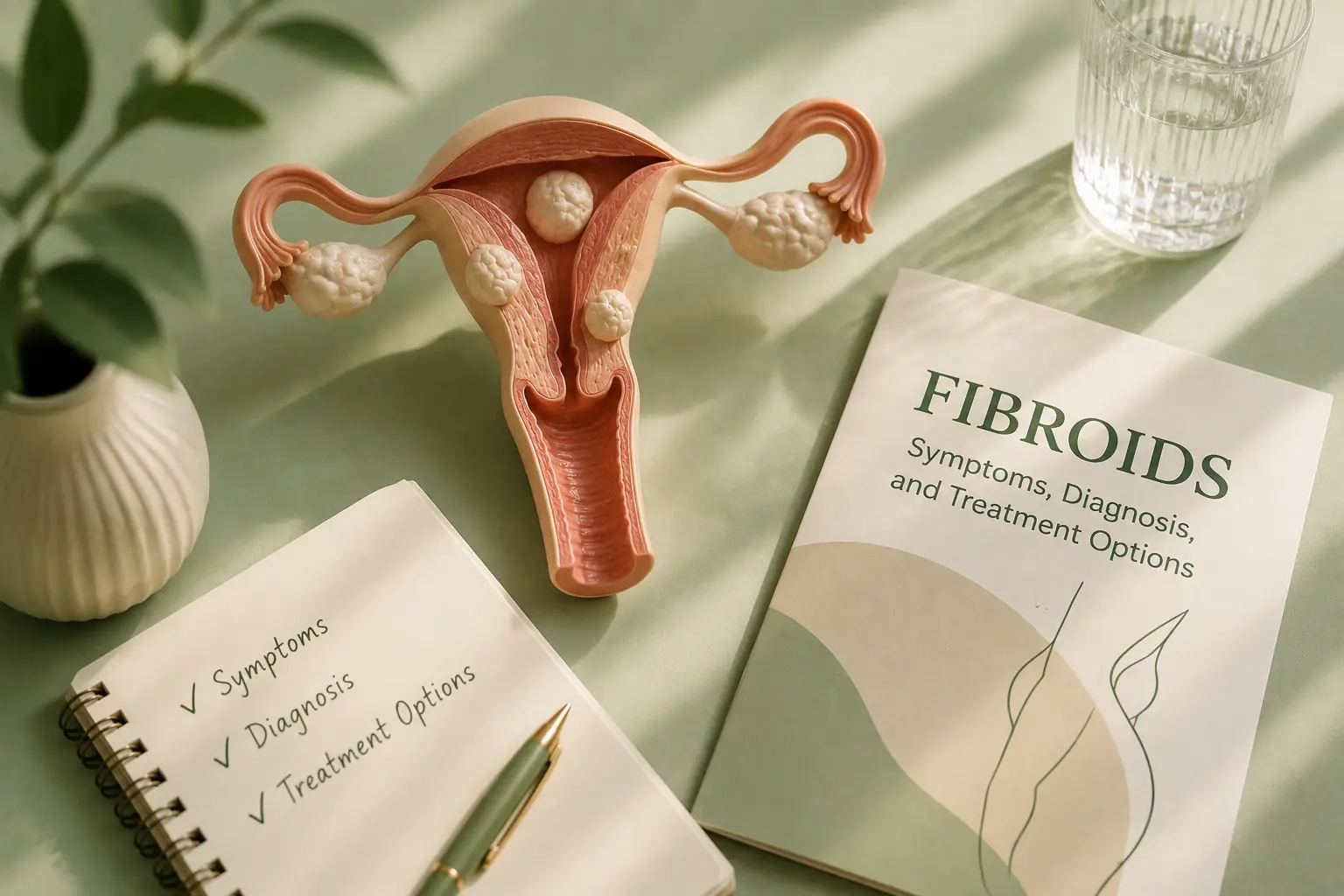
Fibroids come up in conversation more than most women expect, often because a friend was diagnosed, or because one turned up unexpectedly on a routine scan. They’re one of the most common gynaecological findings during the reproductive years, and for many women, they cause no trouble at all. For others, the same growths bring on heavy bleeding, pressure, pain, or fertility concerns that are very much worth addressing. Understanding what fibroids actually are, and what factors decide whether yours need attention, makes the whole topic far less daunting.
What Are Fibroids?
Fibroids, also known as uterine leiomyomas, are benign growths that develop from the muscle of the uterus.
They’re extremely common, particularly during the reproductive years. Plenty of women carry fibroids without ever noticing a symptom, only finding out when an ultrasound for something unrelated happens to pick one up.
For others, the picture looks different; fibroids can drive significant bleeding, pain, pressure, or reproductive difficulties.
What Symptoms Can Fibroids Cause?
What you notice, if anything, comes down to the size, number, and location of the fibroids involved.
Possible symptoms include heavy periods, periods that run long, pelvic pressure or discomfort, abdominal bloating or visible enlargement, needing to urinate frequently, constipation, pain during sex, iron deficiency or anaemia, and in some cases, fertility difficulties.
Oddly, some very large fibroids barely register symptomatically, while a small one in the wrong spot can cause substantial bleeding.
Different Types of Fibroids
Where a fibroid sits matters more than almost anything else about it.
Submucosal fibroids push into or distort the uterine cavity itself. Even small ones here can trigger heavy bleeding and occasionally interfere with fertility.
Intramural fibroids sit within the muscular wall of the uterus. How much they matter depends on their size, position, and whether they encroach on the cavity.
Subserosal fibroids grow outward, toward the outside of the uterus. They’re less likely to disrupt periods or fertility but can cause pressure symptoms once they get large.
How Are Fibroids Diagnosed?
A pelvic ultrasound is typically the first step, mapping the number, size, and location of fibroids while also checking the ovaries and surrounding structures.
If there’s a question about whether a fibroid is affecting the uterine cavity, saline ultrasound or hysteroscopy may follow, the latter allowing a direct look inside the uterus.
MRI comes into play for more complex cases, multiple large fibroids, complicated anatomy, or when it’s unclear whether fibroids or adenomyosis are behind the symptoms.
Do All Fibroids Need Treatment?
Not necessarily. Small, symptom-free fibroids that aren’t affecting fertility can often just be monitored over time.
Treatment tends to enter the conversation once symptoms or reproductive concerns make intervention worthwhile.
Treatment Options
There’s no one-size-fits-all approach here; treatment should be built around the individual.
Medication can ease heavy bleeding or pain but won’t make fibroids disappear permanently. Hormonal treatments may help control symptoms in the right candidates.
Fibroids projecting into the uterine cavity can sometimes be removed hysteroscopically, avoiding abdominal surgery altogether. Myomectomy takes the fibroids out while keeping the uterus intact, an option worth considering when symptoms are significant, or fertility is a factor.
Other approaches exist too, including uterine artery embolisation and various minimally invasive techniques, with the right choice often hinging on whether future pregnancy is part of the plan.
Hysterectomy offers a definitive fix since the uterus itself is removed, making it suitable only for women who don’t wish to preserve fertility.
Fibroids and Fertility
Having fibroids doesn’t automatically mean your fertility takes a hit. Location does most of the heavy lifting here.
Fibroids that distort the uterine cavity, submucosal ones especially, show the clearest link to poorer reproductive outcomes. Intramural fibroids that leave the cavity alone are a murkier picture, and surgery beforehand isn’t automatically the right call. Any potential benefit has to be weighed against surgical risk and the delay it adds before fertility treatment can begin.
Fibroids Before IVF
Ahead of IVF or embryo transfer, the questions worth asking go beyond simply “is there a fibroid.” Does it distort the uterine cavity? What size and location? Is it one fibroid or several? Are there real symptoms? Has there been prior implantation failure or pregnancy loss? What’s the woman’s age and ovarian reserve?
Those specifics tell you far more than the fibroid’s presence alone ever could.
Frequently Asked Questions
Almost never. The overwhelming majority are completely benign, cancerous fibroids are the rare exception, not the rule.
Do fibroids always grow?
Not necessarily; their behaviour is genuinely unpredictable. Many stay the same size for years, and it’s common for them to shrink once menopause arrives.
No, and removing one just to be safe isn’t automatically the right call. It comes down to where it sits, how big it is, what symptoms you’re having, whether it touches the uterine cavity, and your individual fertility picture.
Yes, especially fibroids sitting inside or distorting the uterine cavity; those are the ones most likely to drive heavier bleeding.
They can. Removing existing fibroids doesn’t prevent new ones from forming down the track.
When to Make an Appointment
Consider a gynaecological assessment if you’re dealing with heavy periods, pelvic pressure or pain, fibroids already causing symptoms, or concerns about how fibroids might affect your fertility. A detailed ultrasound alongside individual assessment helps determine whether watching and waiting or active treatment makes more sense for you.