You’ve just been told there’s a cyst on your ovary. Your mind jumps to cancer before the doctor’s even finished the sentence. Take a breath; that’s rarely where this ends up. Ovarian cysts are one of the most common findings in gynaecological ultrasound, and in women who haven’t reached menopause, the overwhelming majority are nothing more than the ovary doing exactly what it’s supposed to do each month.
What Is an Ovarian Cyst?
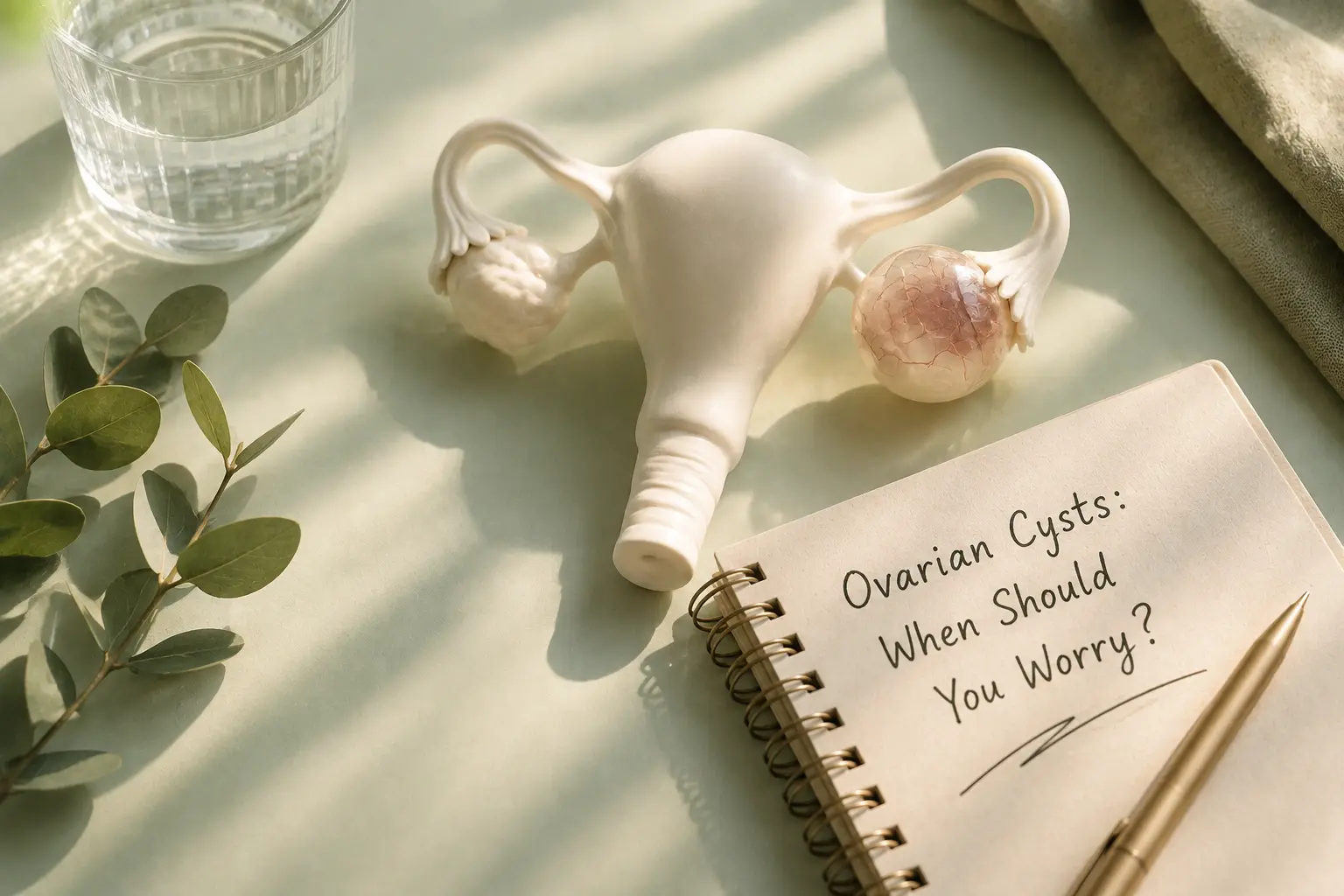
Simply put, it’s a fluid-filled sac, sometimes with a bit of solid tissue mixed in, forming in or on the ovary. That’s the whole definition. The real question isn’t whether you have one, it’s what kind, and the kind determines everything that follows.
Functional Ovarian Cysts
Every month, your ovary grows a follicle to release an egg. Sometimes that follicle, or the structure left behind after ovulation (the corpus luteum), grows bigger than it should and shows up as a cyst on a scan. This is a functional cyst, and it’s by far the most common type anyone will ever have. Give it a cycle or two and most vanish on their own, no treatment, no drama.
Other Types of Ovarian Cysts
Not every cyst is functional. If you have endometriosis, you may develop an endometrioma, an ovarian cyst filled with old, darkened blood that’s earned the nickname “chocolate cyst.”
A dermoid cyst, technically a mature cystic teratoma, sounds alarming but is almost always benign, even though it can contain oddly varied tissue.
Cystadenomas are another benign type that can occasionally grow surprisingly large without causing harm.
Then there’s the word that scares everyone: complex. It’s not a diagnosis; it’s a description. It just means the ultrasound picked up solid areas, internal walls, or other features that need a second look before anyone can say what it actually is.
What Symptoms Can an Ovarian Cyst Cause?
Here’s the twist: most cysts announce themselves by doing absolutely nothing. No pain, no signs, found purely by accident on a scan for something else. When symptoms do show up, expect pelvic discomfort, pain on one side, bloating, pain during sex, or periods that suddenly feel different.
Sudden, sharp, severe pain is a different category entirely, and it usually means one of two things: the cyst has ruptured, or the ovary has twisted.
What Is Ovarian Torsion?
Torsion happens when the ovary twists on itself, cutting off its own blood supply. It hits fast, hurts badly, and often brings nausea or vomiting along with it. This isn’t a “book an appointment for next week” situation. Sudden severe pelvic pain means the emergency department, not the GP waitlist.
How Are Ovarian Cysts Assessed?
A pelvic ultrasound tells most of the story. The size of the cyst, whether it looks simple or complex, any solid parts, how blood flows through it, whether it’s changed since the last scan, and whether one ovary or both are affected, all of this shapes what happens next. Age and menopausal status matter here too. Occasionally, blood tests or extra imaging fill in the gaps.
Do All Ovarian Cysts Need Surgery?
Most cysts just get watched. Repeat scan, check for change, done. Surgery enters the conversation only when a cyst won’t go away or keeps growing, causes symptoms you can’t ignore, looks concerning on imaging, causes a complication, gets very large, or simply can’t be pinned down with confidence.
Ovarian Cysts and Fertility
Functional cysts, the everyday kind, generally leave fertility untouched. Endometriomas are the exception that needs real thought, because both the endometriosis behind them and the surgery used to remove them can chip away at ovarian reserve.
If pregnancy or IVF is on your mind, that means removing an endometrioma isn’t a given. It’s a decision made case by case, not a box to tick.
Frequently Asked Questions
Regularly, yes. Functional cysts are notorious for resolving themselves within a cycle or two without any treatment at all.
Not even close, in most cases. Complex just describes the ultrasound picture; plenty of harmless conditions look complex on a scan.
Rarely the cyst itself; more often the condition behind it, endometriosis being the most common example.
No, and removing it isn’t automatically safer. It can lower ovarian reserve, so the decision has to be made individually.
The assessment changes, yes; age and menopausal status shift how a cyst gets evaluated and managed.
When to Make an Appointment
Already have a cyst on your file? A proper assessment settles whether it just needs watching or something more active. Sudden, severe pain, especially with nausea or vomiting, is never a wait-it-out situation; get seen immediately.