
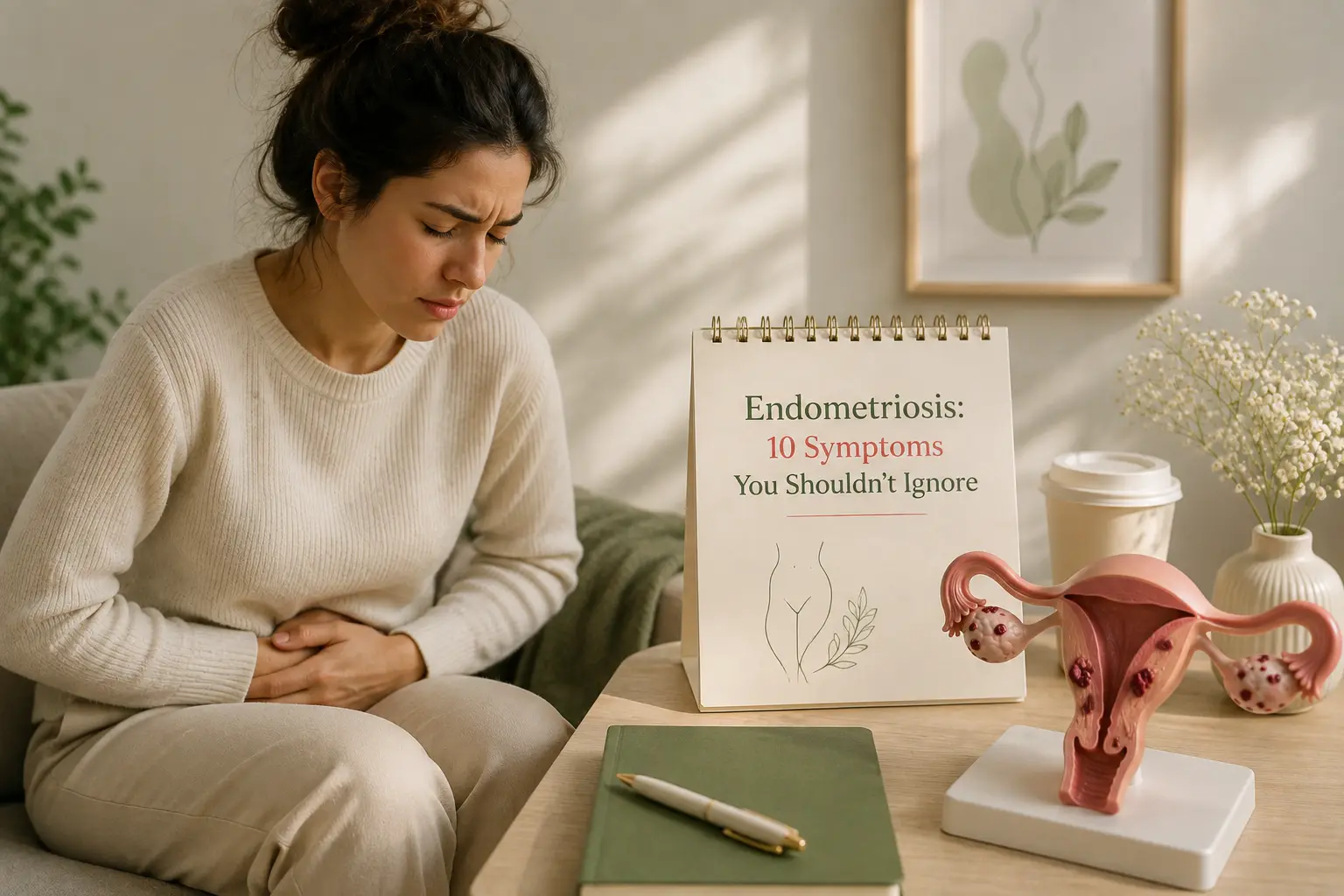
Endometriosis is a chronic condition in which tissue similar to the lining of the uterus grows outside the uterus. It commonly affects structures within the pelvis, including the ovaries and tissues surrounding the uterus.
Some women experience severe symptoms, while others have relatively mild symptoms or none at all. Importantly, the severity of pain does not always reflect the extent of endometriosis.
Here are 10 symptoms worth recognising.
1. Painful Periods
Period pain is common, but severe pain that interferes with school, work, exercise or everyday activities should not simply be dismissed as normal.
Pain associated with endometriosis may begin before menstruation and continue for several days.
2. Chronic Pelvic Pain
Endometriosis can cause pelvic pain at times other than during menstruation.
Some women experience persistent discomfort, aching or intermittent episodes of significant pelvic pain throughout the menstrual cycle.
3. Pain During or After Sex
Deep pain during or following intercourse can occur with endometriosis.
There are many possible causes of painful intercourse, however, so assessment is important rather than assuming endometriosis is responsible.
4. Pain When Opening Your Bowels
Painful bowel movements, particularly when they become worse around menstruation, can sometimes be associated with endometriosis.
Other symptoms can include cyclical bloating, constipation or diarrhoea. Because gastrointestinal conditions can produce similar symptoms, appropriate assessment is important.
5. Pain When Passing Urine
Some women experience urinary discomfort or bladder symptoms that become more noticeable around menstruation.
Less commonly, endometriosis can involve the urinary tract.
6. Difficulty Becoming Pregnant
Endometriosis is associated with infertility in some women.
It may affect fertility through several mechanisms, potentially including pelvic inflammation, adhesions, ovarian endometriomas and altered pelvic anatomy.
However, having endometriosis does not mean that you cannot become pregnant naturally.
7. Heavy or Irregular Bleeding
Pain rather than heavy bleeding is the classic symptom of endometriosis, but some women also report heavy periods or bleeding abnormalities.
Other conditions such as adenomyosis, fibroids, polyps and ovulatory disorders should also be considered.
8. Persistent Bloating
Some women with endometriosis experience significant abdominal bloating, particularly around menstruation.
Persistent or unexplained bloating should nevertheless be medically assessed because many gynaecological and gastrointestinal conditions can cause this symptom.
9. Lower Back or Leg Pain
Pelvic pain can sometimes radiate into the lower back or legs.
Again, these symptoms are not specific to endometriosis and require appropriate clinical assessment.
10. Fatigue
Chronic pain, disturbed sleep and heavy menstrual bleeding can contribute to fatigue.
Iron deficiency or anaemia may also be present when menstrual bleeding is heavy.
How Is Endometriosis Diagnosed?
Diagnosis begins with a detailed discussion about symptoms and medical history. A gynaecological examination may be appropriate.
Ultrasound
A specialist pelvic ultrasound can identify some forms of endometriosis, particularly ovarian endometriomas and features of deep endometriosis.
A normal ultrasound, however, does not necessarily exclude endometriosis.
MRI
MRI may be useful in selected patients, particularly when mapping deep endometriosis or complex disease.
Laparoscopy
Laparoscopy allows direct visualisation and treatment of endometriosis and may provide histological confirmation.
However, surgery is not automatically required for every patient before treatment can begin. The approach should be individualised according to symptoms, imaging, fertility goals and clinical circumstances.
How Is Endometriosis Treated?
Treatment depends on several factors:
- Severity and type of symptoms
- Age
- Location and extent of disease
- Previous treatment,
- Fertility plans
- Whether pregnancy is currently desired
Treatment may include pain-relieving medication, hormonal therapy and surgery in appropriately selected patients.
For women trying to conceive, management requires additional consideration because some hormonal treatments suppress ovulation and therefore prevent conception while being used.
Our endometriosis management service covers this full range of options, tailored to each woman’s symptoms and goals.
Endometriosis and Fertility
This is an important area where individualised treatment matters.
Some women with endometriosis conceive naturally without difficulty. Others may benefit from fertility assessment or assisted reproductive treatment.
Factors including age, ovarian reserve, fallopian-tube function, semen parameters, duration of infertility and severity of endometriosis all influence management.
Surgery before fertility treatment is not automatically beneficial for every woman with endometriosis. The potential benefits must be balanced against surgical risks, including possible effects on ovarian reserve when ovarian endometriomas are treated.
When Should You Seek Help?
Consider a gynaecological assessment if you experience: Period pain that interferes with everyday activities Persistent or recurrent pelvic pain Pain during intercourse Cyclical bowel or bladder symptoms Difficulty becoming pregnant Symptoms that are progressively worsening
Earlier assessment can help establish the cause of your symptoms and identify appropriate treatment options. Our pelvic pain assessment service is a good starting point if pain is your main concern.
Frequently Asked Questions
No. Endometriosis is one possible cause. Adenomyosis, fibroids and other conditions can also cause painful periods.
Yes. Some forms of endometriosis may not be visible on routine ultrasound.
No. Many women with endometriosis conceive naturally.
No. Treatment should be individualised. Medical management, fertility treatment or surgery may be appropriate depending on the circumstances.
Symptoms or disease can recur following treatment, including after surgery.
When to Make an Appointment
If painful periods or pelvic symptoms are affecting your everyday life, or if you have endometriosis and are concerned about fertility, a gynaecological assessment can help determine the most appropriate next step.